Tuesday, October 21, 2014

Taxonomy of the Platicorn

The Platicorn's scientific, fancy, latin name is Platicornus Prodigalis, which literally means Bizarre Platicorn.
Now, to explain the name. Platicorn is not part of any known (emphasis on the know) Family, Genus, or Species. That is because it is truly one of a kind genetically. The Platicorn, however is part of the Kingdom Animalia, the Phylum Chordata, the Class Mammalia, and the Order Carnivora. I'm not too great at explaining, so I put a link to Wikipedia. >I hope this makes it clearer for you< Your'e welcome.

Now, on a scale from one to ten, how confused are you. If it's above three then I'll consider myself a failure.

Thursday, August 28, 2014

I Need to Explain!

As you all know, Thiago Oliveira is a fictional character I created and brought to life with my totally boss acting skills. At least I hope. I just want y'all to know that I do not agree with the ideals of  "Mr. Oliveira". I don't! Platicorn hunting is disgraceful! I just wanted to show you what causes some Platicorn hunters to do what they do, kill Platicorns. Platicorns are in huge danger, and we need to do all we can to make sure these incredible creatures stay alive. 
But we also need to make hunters stop killing Platicorns for their personal safety! Platicorn hunting is extremely dangerous and costly for the hunters. Everything can go wrong extremely fast. And when it goes wrong, some bad shit can happen.

To those who can't see the caption, it says "When hunting trips go bad..."
Platicorn hunting is wrong. I believe this firmly.

Wednesday, July 9, 2014

The Wise Words of Thiago Oliveira


It takes courage to be a Platicorn hunter, but also hate. Platicorn hunters usually target younglings and Platicorns without poison. People like Olivera may have good intentions, but Platicorns are to be left alone. Revenge never does any good.
I got to admit, though, that watching the entire Brazil-Germany game must have been courageous for a Brazilian like Thiago.

Many Thanks to Jacopo Villani for Videotaping 

Saturday, July 5, 2014

Everything you Ever Wanted to Know About Platicorn Sex* (*But were too afraid to ask)

The Platicorn's mating is a very complex ritual, still much of a mystery to biologists. The mating is very strange in very many ways. The female dies after the process, and the male looses his main hunting asset-the venom in the horn. Add to this the fact that only a hatchling survives, and you get yourself a evolutionary disaster... or so it seems.
It all starts in March, when female Platicorns go in heat. A female Platicorn wanders into a male Platicorn's territory. In a matter of days (two to five) the male will find the female. The male will check that the female is in good health then it will tap the females pale green horn with its dangerous poisonous black one. Evolution has given Platicorns very low sexual standards, so if both the male and the female are in good health, the two Platicorns will mate. Ah well. The matting season ends in the final days of April when the female stops her heat.
Female Platicorn Horn


Male Platicorn Horn

If a female is pregnant, it will find a remote and safe place to lay the eggs. After about eight months, the baby Platicorns will hatch. The mom will die two to three hours later. Only one offspring survives because as soon as the hatchlings come out of their eggs, they fight each other to death in order to immediately set into motion the creature's instincts to survive. This gory start to a gory life is actually very useful. The mother will be dead because of the poison, and the "winner" will feast on the already rotting carcass. This may seem brutal to us humans, but it is a survival technique.
That is what Platicorns are all about. Surrviving amongst blood. Since birth, the Platicorn is a natural killer. A killer that belongs in the most frightful and twisted nightmares.

Tuesday, March 18, 2014

The Killer in the Horn

Platicorn poison is one of the deadliest poisons known on Earth. There is no known cure, though it is a highly researched subject. It is incredibly fast acting, able to bring around death in seconds. It's made in a tiny gland called the Alveois gland at the base of the Platicorn's horn. It squirts out through a tiny channel called the Origus spur when needed. It goes into action when a message from the brain tells the Alveois gland to eject the poison. It then enters the victim's bloodstream where it quickly shuts of most bodily functions. It starts by cutting off blood flow to the limbs, and then proceeds to destroying nerves and brain tissue. Once the victim is dead, the venom flows out through the wound, so the Platicorn doesn't get the venom into its system when eating the prey. It is a highly corrosive substance, but it is fairly pain-free. The effects were first listed in 1871 by British biologist Henry F. Thompson (1816 - 1889) in his book "On the Effects of Venom".

Henry F. Thompson

Mr. Thompson was so ahead of his time not because he wrote down the effects, which had been done earlier, but because he had found the cause! He went to the microscopic level. He was able to prove that the poison caused an allergic reaction, that effected some victims worse than others. He also proved that there finding an antidote was possible, but it could cause another allergic reaction, even worse than the original.It is a very useful book, and is widely used by biologists to this day.
The venom of the Platicorn is very dangerous, with no known cure. Finding an antidote is an enigma for research doctor to this day. It is a true killer in a horn.

Monday, March 10, 2014

A Terrifying Experience

There is nothing more terrifying to see another person be attacked by a Platicorn. They just appear out of nowhere and ram into a person with their poisonous horn. For the unlucky victim, it's all over in seconds, but for a witness, it is a traumatic experience (if, of course, they don't get a heart attack)They often wonder, "Why that person, why not me." Biologist and Neurologist have been trying to figure this out for centuries. Is it just chance, or does the Platicorn plan the attack beforehand. 
Recently, however, biologists at Harvard University have found out that the Platicorn has very similar hunting habits to the Bald Eagles. This is quite credible, since the Platicorn is actually 10% eagle.

A Bald Eagle in Flight

Anyways, I was able to talk to a Brazilian rancher named Thiago Oliveira, who lost a brother Danny Olivera because of a Platicorn in front of his eyes. He said that he was talking to the brother one second, and the next the brother was with a Platicorn horn through his chest. He says he will never forget the sound the brother made. "A squelch," he said "almost like a dart hitting a dart board. His blood soaked everywhere. The trees, the grass, me..." Yes, Platicorn hunts are no clean things. Mr. Oliveira said that he pulled out his shotgun, and shot the Platicorn on the wing. The beast fell over, the brother still on its horn. He shot again, this time in the stomach. He had killed the animal, but the brother was still gone.
What I think the most interesting thing about Platicorn hunts is the strength of the animal. It is a very small animal, but it is able to take down enormous things by stabbing the prey. This is mostly because of the great wing and neck muscles the animal has. It is an extremely aerodynamic animal. It has great eyesight, and can spot a hare from a mile away. The Platicorn is a truly powerful animal, built to kill. Trying to stop it from killing is like trying to prevent a fish from swimming, or a bird from flying.

Tuesday, January 28, 2014

Save the Platicorn!!

Did you know that the Platicorn is the most endangered animal in the world? There are only 150 specimens living in the wild! Scientists say that if something doesn't change soon, the species will be extinct in 2030! Something needs to be done! 


  The Platicorn is critically endangered


Their problems are caused mostly because of their own adaptations, and they are only made more problematic by human damage to the natural environments. The Platicorn is highly territorial, needing more than 18 acres squared in which to survive. Humans are destroying the precious acres remaining as farmland, and these majestic beasts are finding themselves with no place to go. Another cause of danger to the Platicorns is in the genetic build of the species itself. Once it mates, it looses all its deadly poison, leaving it more or less vulnerable to other Platicorns and some other extremely viscus predators (Of course, it still is quite powerful).
To save the Platicorn, we all need to do our share! Firstly, and most importantly, protect the Platicorn's habitats! Don't pollute swamps and forests. Recycle and reuse paper, and be knowledgeable to the problems in the enviroment!
We need to do all we can to save the Platicorn!!

Sunday, December 22, 2013

Uses of the Platicorn


The Platicorn is heavily hunted in the Amazon. It has  many important properties. The medicine it produces is very powerful, and it is found in most medicines. The poison is also sometimes found in extremely small quantities in brain medicines. The meat is considered a delicacy in most countries. The claws are very powerful weapons, and are usually used for sacrificial purposes in the Platiccinioun religion. 

Tuesday, December 10, 2013

Monday, December 2, 2013

The Whole Thing


Platicorn
Platicornus Prodigalis

Introduction 

The Platicorn is a peculiar creature that, to this day, few have ever seen and lived to tell of it. It is a hybrid, with 50% Platypus, 33.3% Unicorn and 10% Eagle, and 6.7% Dragon, an amazing and hardly credible mix that humans are still to this day wondering about. It is a warm blooded carnivore, and highly dangerous, because of its poisonous horn. It is said to live in swampy areas, mostly in warm places. Because of their huge territories (up to 18 acres squared) that males protect with their lives; there are said to be less than 150 specimens left in the wild.


A  Platicorn habitat.


Description
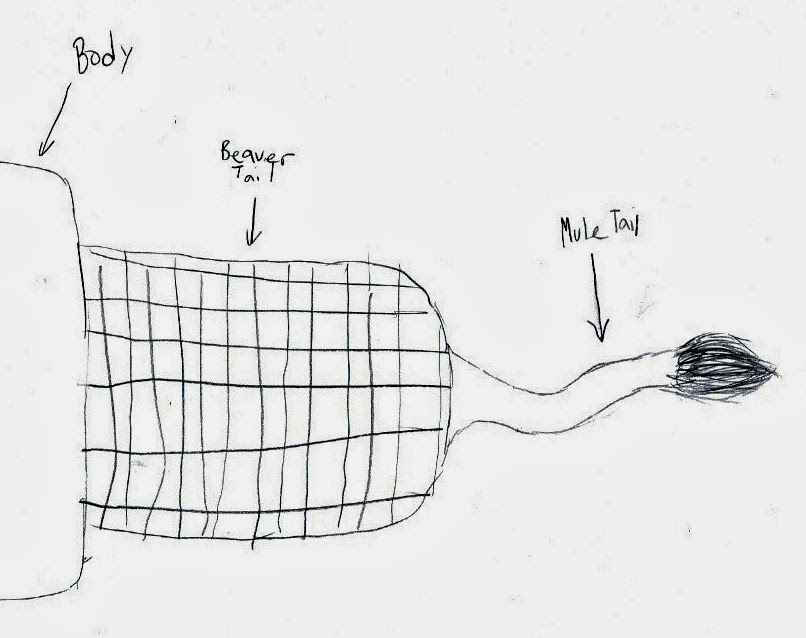
The Platicorn is an amazing creature, being as big as a school desk without counting the bill or the tail. It looks like a Platypus with bird wings and a horn. It has a very strange tail: like a mule tail attached to a beaver tail. Before mating, its horn is black, because of the poison, but after matting, the poison will be gone, and it will turn gold.


An picture view of a pre-mating horn


Mating

The mating season starts in March and ends on the final days of April. It is a very complex ritual that biologists are just barley starting to understand the motives and the whole scheme of.
Biologists think a male of around ten years of age will go up to a female of its choice and tap her horn with his poisonous black horn and injects the poison, causing the female to get pregnant with eggs. (Platicorns are mammals, but like the Platypus, they lay eggs) The male then shoos the female away, being left vulnerable without his deadly poison.
1-2 months later, the female will lay the eggs and die about one week later, because of the poison. After about ten days, the eggs will hatch and the hatchlings battle each other. The strongest and the healthiest will then will eat the other dead siblings. It will then go on to eat the body of the poisoned mother. Babies are immune to the poison till the age of two, but they are still far from safe.

Habitat

Platicorns live in swamps in North and South America, Parts of Europe, Australia, and Reunion Island. They love sun and heat, but also enjoy the cold because it sharpens their senses and distracts their prey. They often sleep in rot away logs and holes in fallen trees. Males will never let other males in their territory, especially during the mating season. If other males enter, horrible fights will occur, usually ending in death. Their huge territories are often in danger also because of pollution and other human causes.

Diet

The Platicorn is a fierce carnivore, eating an average of 50 pounds of meat daily.  They love to eat humans when they can.  They also eat animals such as Alligators, Pigs, Jaguars, other Platicorns, Dogs, and other small prey. However, they are very adaptable. During tough times, they will eat long dead bodies and sometimes vegetation. There has been a record of a hungry, stray Platicorn taking down an African bull elephant in Nigeria.

Hunting
        
The Platicorn will survive by hunting only once a week. Its hunting techniques are very effective, since they are perfectly adapted to his surroundings. It hunts by using its magnificent wings to fly above the canopy so that it can see its prey, but the prey doesn’t see him. From up in the air, it singles out its prey with its very evolved eyes, and then it dives down horn first into the desired prey. It then holds the prey still as it injects the poison into it. When the prey dies, the Platicorn then brings the dead prey to its barrow to eat in privacy. In the occasion that it doesn’t finish it. The predator saves some for another time by burring it in mud.           

Limiting Factors

Platicorn have a lot of limiting factors, ranging from natural factors to human caused ones. The Platicorns are very picky and violent animals. Territory is everything for them. They find a piece of land they like, and then they push out the occupying male by killing it. With the territory, they also acquire the right to any female that wonders in the territory, and to the recourses in the land. The territories are usually about 18 acres squared, but can be more. The males protect these immense territories with their life, and are always ready to die before letting another male take them. They will not move into the territory of a deceased male unless they have killed the old occupier themselves. However, to make matters worse for the species, humans are always destroying the lands, polluting them, or turning the rainforests or swamps into grassland for cattle. As far as biologists know, no other animals except Platicorns themselves hunt Platicorns, because they are far too dangerous, but fierce predators such as the jaguar will still attempt to prey the hatchlings in times of hunger. Platicorns are not very vulnerable to common animal diseases, but are quite defenseless to a very rare species of bacterium called Cornisemveri, which makes male Platicorns’ horns fall off.


       A male Platicorn


History

Platicorns originated from the Nile Delta as herbivores around 100,500 B.C. They then moved up towards Greece to the river Acheron for reasons unknown to archeologists in about 100,300 B.C.  They found the habitat to their liking, especially the humidity. However, they found that their herbivore needs couldn’t be met, so, over the course of around 100,000 years they became carnivores. It was now around 300 B.C., and the Greeks were desperate to get rid of these bloodthirsty animals. The Platicorns, however, fixed the situation simply: They left the land and migrated again, this time to swamps and rainforests all over Asia and Africa. At this point, most Platicorns adapted again by gaining wings and poison. Other Platicorns soon died, defenseless to the other males. The species than divided, some going to Australia, and some even braving the Pacific to go to the Pacific Islands. There, some settled, while others went to the Americas and the Caribbean. There, the Platicorns that had arrived found themselves at home. The land suited their needs perfectly, and the species grew in those lands more than ever. Most Platicorns now dwell in these regions.


Mythology

There are some legends in Greece and Macedonia that the Platicorn is said to have originated from Olympus as a weapon against the evil Titans. It was made powerful and smart by Zeus to fight monsters, which proved to be effective. Since the Gods had won. The Platicorn gained so much power and strength that he began to notice how the gods treated him inferiorly to them. He began to plot Olympus’s downfall, and, sure enough, the mighty Platicorn declared war on Zeus.  At the time, the fierce beast was blinded by rage and pride, and had no idea of how strong Zeus was, so he lost the war.  Zeus and the Olympians cast the Platicorn down to Earth as punishment, striping him of his intelligence, his immortality and his memory of his previous life. It found its way to the damp swamps and rainforest and settled in. But, even without his lost intelligence, he still held on to a memory of being wronged. He would take his anger out on life on earth, even on his own kin. 

Religion

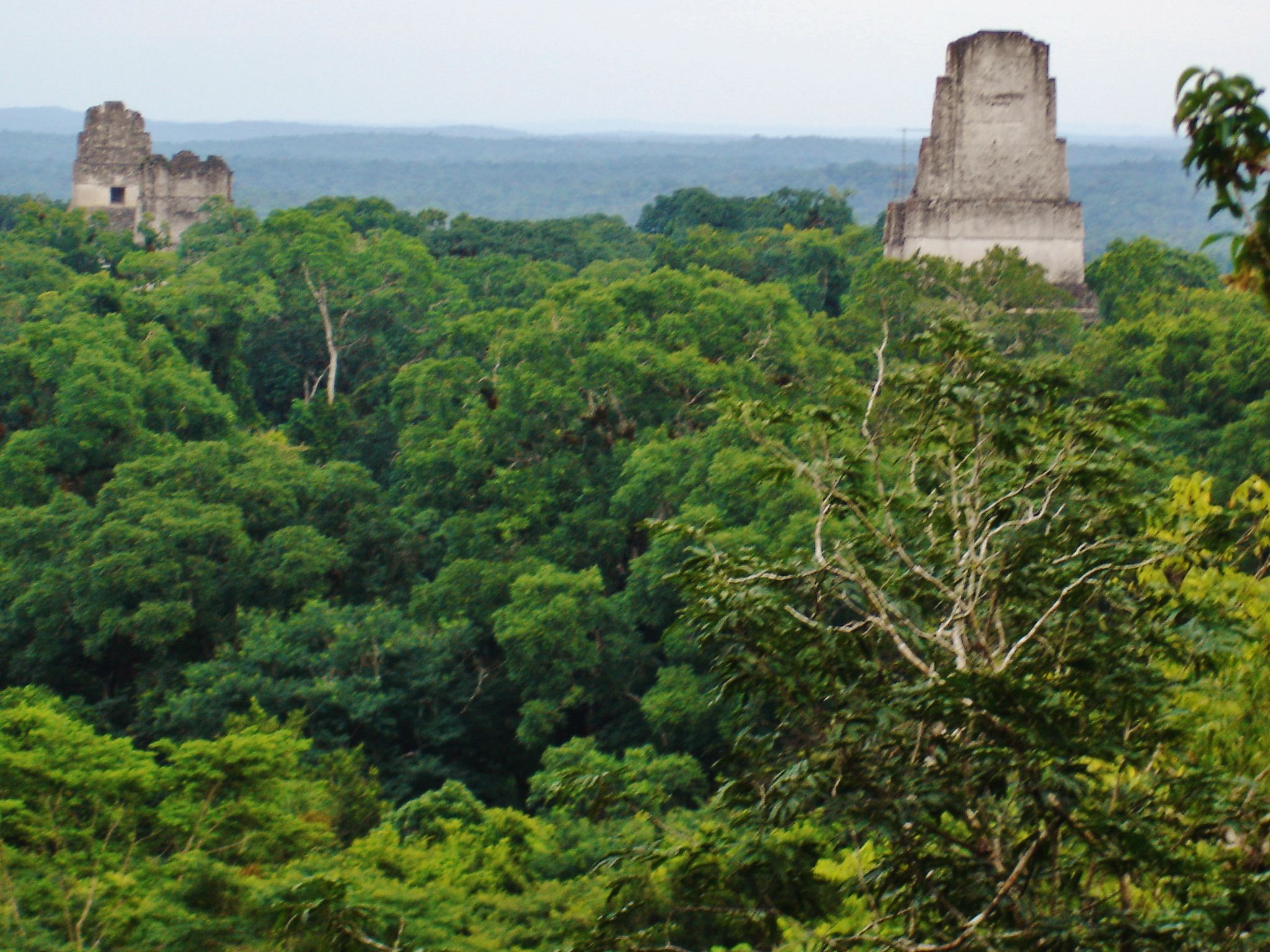
Platiccinioun is an ancient religion, which very few people believe in today.  It originated in the Amazon; where very few temples still exist there.  Very few people still believe in this religion.  They strongly believed that man was inferior to the majestic Platicorns, and very often rowed the sacrifices into Platicorn infested swamps. The sacrifices would then be tied to logs and would be helpless from the merciless Platicorns. The Platicciniouns would do these gory rituals often, especially when they thought they had done something wrong. This grizzly “religion” has been passed on from generation to generation for a long time, but it is gradually coming to a stop as knowledge, technology and civilization is also coming to these dark corners of the human world.


An ancient Platiccinioun pyramid temple

Poison Effect

The male Platicorns’ horn is very dangerous because it is full of deadly Platicorn poison. The poison is colored black, and will bring death to a victim after a couple of seconds.  The poison has no known cure, since, in a few seconds, it stops blood flow to the limbs, destroys nerves, and destroys brain tissues. It is highly corrosive, but, strangely, pain free. Ever Platicorns poison is slightly different, and a Platicorn is immune to its own poison.  A male is immune to the poison of another Platicorn until mating time, but it is very vulnerable after the process.


This amount of Platicorn poison is enough to kill 20 grown men


Sunday, December 1, 2013

True or False?

How do you distinguish a real Platicorn from a fake one? They look pretty similar, but, if you take a look, you can see the difference. Look at this fake "Platicorn" I found on the web below.


It looks similar, and even identical to a real Platicorn. But the two are actually incredibly different. A real Platicorn, first of all, has wings. It also has a mule tail attached to the beaver tail. Also, the "Platicorn" above looks harmless and cute. Unfortunately, that is not the case. A true Platicorn is a fierce killing machine. Not the case above, clearly.
When looking at Platicorns, you should always look for these four things:

  1. Beaver tail with mule tail attached to it
  2. Wings
  3. Fierce look
  4. Brown fur

Friday, November 29, 2013

A Little Summary


The Platicorn


The Platicorn is an apex predator that dwells in swamps and rainforests, mostly in South America. It has a tremendously poisonous horn. It is a very weird hybrid: 50% Platypus, 33.3% Unicorn, and 10% Eagle, and 6.7% Dragon. There are only about 150 specimens left in the wild.  They are extremely strange creatures.

Figure A


The Platicorn looks like a Platypus with huge bird wings and a horn. It also has a tail, which looks like a mule tail attacked to a beaver tail. The horn is black with poison before mating, but it turns golden after.
The mating is a very strange ritual. It starts with the male Platicorn finding a female and touching her horn with his.  

 The poison in the male’s horn will react strangely to the female’s body, and they will conceive about 10 eggs, than they will separate. The male will have no poison. The female will lay the eggs, than die of poison. The eggs will then hatch, and the hatchlings will fight each other to death. The winner will eat he mother and go in search of shelter.
Platicorns live in swamps and rainforests. They live in rot away logs and underground barrows. Platicorns are very territorial, so if a male enters another Platicorns territory, they will fight to death
Platicorns are apex carnivores. They eat about 50 pounds of meat daily. They will eat any living creature they see if hungry. They hunt by flying above the prey, and than diving into it, horn first. They store prey that they don’t eat in the mud outside their barrows to conserve the meat.
There is a religion in the Amazon rainforest called Platiccinioun. It worships the Platicorns as gods. But they think the species as an evil god-species. The Platicciniouns fear the Platicorns, and they sacrifice humans to them to keep the gods satisfied. It is slowly coming to an end as more and more parts of the rainforest are explored, and as the tribes go towards civilization and knowledge.
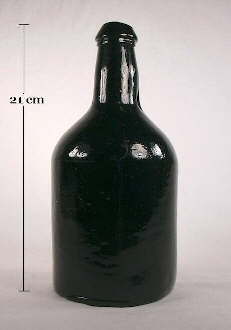
The poison of a Platicorn is a very horrible weapon in the animal’s arsenal. It is highly corrosive, but, strangely, it provides a pain free. It affects the victim by stopping the organisms blood flow, destroying its nerves, and killing its brain cells all in the course of seconds. Figure C is a drawing of 21 centimeters liquid of Platicorn poison. That amount is enough to kill 21 grown men.


Figure C


Wednesday, November 27, 2013

The Introduction


This is the Platicorn. It is the coolest animal in the world. It is. There is no way to avoid the truth. It's just plain old awesome.

Tuesday, November 26, 2013

Why, oh Why


Here are some of the reasons why you should like the Platicorn:


  1. It's weird 
  2. It has wings
  3. It's poisonous
  4. It's a fierce predator
  5. It has an awesome name
  6. Its sex is messed up
  7. It has a blog about it
  8. It's basically a bunch of other animal parts put together
  9. It's basically a Platypus with tons of mutations from other organisms
  10. It's astonishing
  11. It has huge territories
  12. There are only 150 specimens living in the wild!
  13. It just is, face it
  14.